Why Vintage Seiko Watches Are So Popular
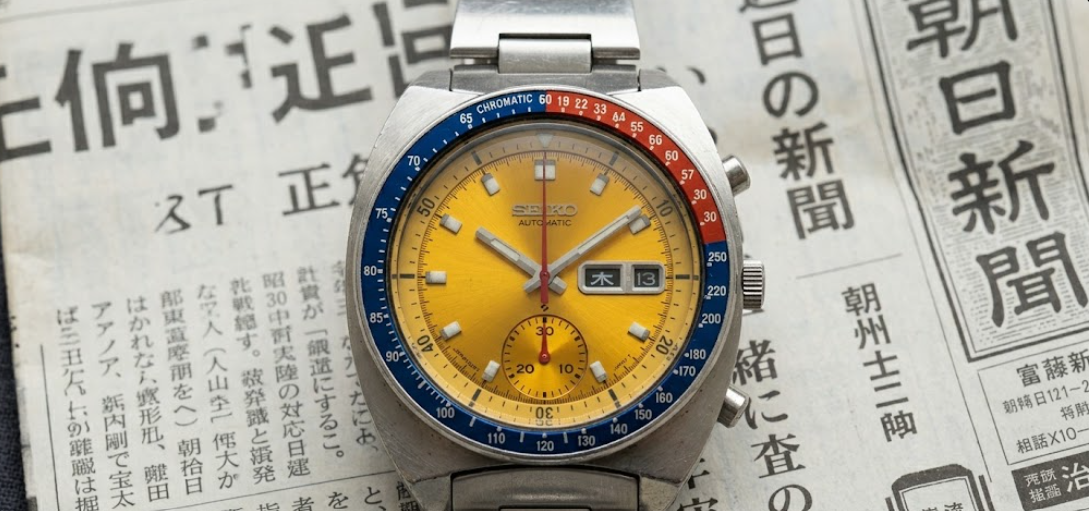
Sometime around 2006, a watch enthusiast named David Bruno was reading through archived NASA transcripts and noticed a passing reference to a Seiko watch. He wrote to the astronaut in question, a retired colonel named William Pogue. Pogue wrote back. Yes, it was a Seiko 6139. Yes, he had worn it on the Skylab 4 mission from November 1973 to February 1974. He wore it for 84 days in orbit. He preferred it to the NASA-issued Speedmaster.
When this story broke in the collector community, prices for the 6139 series spiked almost immediately. Not because the watch suddenly became better. It had always been excellent. The story just reminded people of something they had been overlooking.
That pattern — discovery, reappraisal, rising demand — describes the broader arc of vintage Seiko collecting over the past two decades. A category that was once treated as the affordable alternative to Swiss watches has become a genuine collecting discipline, with its own scholarship, its own reference hierarchies, and its own passionate arguments about which dial variant matters more.
The question worth asking now is not why people collect vintage Seiko. That much is obvious. The better question is why the interest keeps growing.
What Makes Vintage Seiko Different
The honest answer is that Seiko, particularly in the 1960s and 1970s, was making watches that could compete with Swiss equivalents on technical terms while offering something most Swiss watches of the era did not: a distinct visual identity that was unmistakably Japanese.
The dials from this period tend toward the vivid and the textured. Sunburst finishes, unusual dial colours, printed text in fonts that feel of their time without feeling dated. The case shapes — the angular cushion of the 6139 chronograph, the asymmetric shroud of the 6105 diver — are products of design decisions that had nothing to do with what was happening in Geneva.
What distinguishes Japan is its total vertical integration. Seiko, Citizen, and Orient manufacture everything in-house: movements, cases, oils, and even quartz crystals. This level of independence allows them to offer manufacture movements at prices significantly more competitive than their Swiss equivalents. In the vintage context, this matters because it means you are buying a complete object — a watch where the movement inside and the case outside were designed together, finished together, and intended to cohere.
The Zaratsu polishing technique used on King Seiko and Grand Seiko cases is a particular example. The process involves hand-polishing case surfaces on a rotating zinc wheel to achieve flat, mirror-like planes without distortion at the edges. The result is a finish that is, by most accounts, as demanding and technically accomplished as anything produced by Swiss manufacturers. It is also something that photographs poorly, which partly explains why it took so long for Western collectors to notice.
The Watches That Built the Reputation
Seiko 6139 — The "Pogue" Chronograph
Colonel Pogue bought his 6139-6002 at the PX at Ellington Air Force base and subsequently used it throughout his astronaut training leading up to the mission, preferring it to the NASA-issued Speedmaster. While Pogue did not wear the Seiko during an EVA, he did use it for timing experiments and other mission-pertinent uses while in orbit.
A note on reference accuracy: the correct model number for the "true Pogue" chronograph is the 6139-6005 and not the 6139-6002 that it is regularly incorrectly attributed as — the 6005 was the North American market variant, and since Pogue bought his watch in the US at Ellington AFB, this is the more likely reference. The 6139-6002 was the Rest of World code. The collector community continues to debate this, which is part of what makes the watch interesting.
Manufactured in large quantities in the early 1970s, 6139-series chronographs were in many ways light years ahead of their Swiss counterparts, offering brightly colored dials, internal rotating bezels, and day/date functionality along with an automatic chronograph movement.
The calibre 6139A inside these watches features a vertical clutch mechanism and column wheel — technical choices that result in smooth chronograph engagement and a movement that has proven durable across five decades. Case dimensions run approximately 41mm in diameter with a 47mm lug-to-lug, which wears large but not uncomfortably so on most wrists.
Current market prices for honest examples of the 6139 series sit roughly in the $400 to $800 range depending on condition and dial variant, with rarer iterations — the silver dial, the early "Resist" text variant — commanding more. The story behind the watch has pushed prices up, but it has not yet pushed them into territory where the watch no longer makes sense as a value proposition.
Seiko 6105 — The "Captain Willard" Diver
The 6105-8110 is perhaps the most famous vintage Seiko dive watch. It was featured prominently on the wrist of Martin Sheen's character, Captain Willard, in the seminal 1979 Francis Ford Coppola film, Apocalypse Now. The inclusion of the watch was no mistake — the Seiko 6105 dive watch was popular among U.S. servicemen during the Vietnam era.
The watch used Seiko's calibre 6105B, which features 17 jewels, a beat rate of 21,600 BPH, and a 46-hour power reserve. Whilst the movement cannot be hand wound, it does hack and has a quick-set date feature. The case measures 44mm and features an asymmetric crown-protecting shroud that gives the watch its distinctive silhouette. Production ran from the early 1970s through to 1977, when it was replaced by the 6309 series.
The 6105 is a genuine diving instrument. The rotating bezel is unidirectional and functional. The lume plots are large and applied with purpose. This is not a watch designed to look like a diver; it is a watch designed to be one.
What makes the 6105 especially interesting to collect is its direct connection to a specific historical and cultural moment. Interest in Seiko by collectors is about as strong as it has ever been — and the 6105 sits near the top of the vintage Seiko hierarchy for a reason. It represents the brand at its most purposeful: technically sound, visually striking, and tied to a moment in history that gives it genuine narrative weight.
Grand Seiko and King Seiko — Precision as Philosophy
If the dive watches and chronographs represent the adventurous side of vintage Seiko collecting, Grand Seiko and King Seiko represent the considered, meditative side.
Vintage Grand Seiko traces its roots back to 1960, when Seiko aimed to create the ultimate luxury watch that could rival the best from Switzerland. The result was a watch line built to strict accuracy specifications, finished with a level of care that most Swiss manufactures reserve for their most expensive references.
The Grand Seiko 62GS — reference 6245-9000 — is an appropriate starting point. The caliber 6246 inside runs at 36,000 beats per hour (Hi-Beat), which at the time of its introduction was a technical statement as much as a practical one. The dial design is clean to the point of severity. The case finishing, with its alternating brushed and polished surfaces defined by the Zaratsu process, is something you need to see in person before you understand why collectors are willing to pay for it.
The Grand Seiko "62GS" 6245-9000 is a masterpiece from the dial design to its exquisite case. The polishing and chamfering work are tremendous and would not look out of place at some secret dinner party featuring the "Holy Trinity." The fact that these can still be purchased for a relative song is one of the few gifts that the vintage watch market currently offers.
That last point is worth sitting with. A watch with this level of finishing, from any Swiss manufacture, would cost multiples of what a good 62GS costs today.
Why the Interest Keeps Growing
Several things are happening simultaneously, and they reinforce each other.
The scholarship is catching up. For most of the past few decades, documentation of vintage Seiko was sparse in Western languages. Reference databases, collector guides, dedicated forums — these have proliferated over the past ten years. Part of what drives the love for vintage Japanese watches is the scholarship, or lack thereof, at least in Western languages. Seiko, when compared to the other big Japanese brands Citizen and Orient, is fairly well documented. Still, it feels like the amount of widespread knowledge on the history of Seiko is even lacking at times. Collecting vintage Japanese watches is an adventure in a hobby where there is often a feeling that there is little left to discover. That sense of frontier is appealing to a certain type of collector — people who want to do real research rather than simply buy what is already well-mapped.
The market is maturing but not saturated. Vintage models like the 6139-6002 "Pogue" and H558-5000 "Arnie" have appreciated 14 to 16 percent annually, with CAGR up to 19 percent for the "Ripley" chronograph. These are meaningful numbers, but the base prices are still low enough that the market has not priced out enthusiasts in the way that blue-chip Swiss references have.
Seiko's current commercial momentum is feeding interest in its history. Seiko Group Corporation has revealed that, for the 12 months from April 2024 to March 2025, its global watch sales rose by 11.7% to JP¥ 175.9 billion (approximately US$1.22 billion). A brand in this kind of commercial health can invest in heritage storytelling, in reissues, in collaborations — all of which send collectors back to the original references.
The aesthetic is genuinely distinct. At a moment when many collectors are looking for alternatives to the Swiss mainstream, vintage Seiko offers a coherent visual language that does not look like anything else. The yellow dials of the Pogue series, the sunburst textures of the Grand Seiko dress watches, the purposeful asymmetry of the diver cases — these are identifiable and irreproducible.
The JDM Factor
A significant portion of the most interesting vintage Seiko pieces were produced for the Japanese domestic market — models that were never officially distributed outside Japan and which require some effort to source internationally.
Seiko's Japanese Domestic Market releases are renowned among collectors worldwide. Getting your hands on one can truly be exciting. The JDM releases from the vintage era can differ from international models in meaningful ways: dial text, lume composition, case finishing, bracelet options. For collectors focused on accuracy and originality, these distinctions matter.
The practical challenge is access. Japanese auction platforms and domestic dealer networks are where the best material surfaces, and navigating them from outside Japan requires either language ability, patience, or a reliable intermediary. Many collectors outside Japan struggle to access domestic listings and dealer networks. Services such as Nivern exist specifically to bridge that gap — sourcing watches directly from Japanese marketplaces and trusted local dealers, handling authentication, and shipping internationally to collectors who want genuine Japanese market access without the logistical overhead.
What to Watch Out For When Buying
The vintage Seiko market has produced its share of problems, and new collectors tend to encounter the same ones.
Franken-watches. Movements and dials get swapped between cases. A Seiko reference number is engraved on the case back, and that number should correspond to the caliber inside. The first two digits of the reference number indicate the movement family. If they do not match, something has been changed. This is not always disclosed.
Repolished cases. Case polishing destroys the intended surface contrast on Seiko watches — particularly on King Seiko and Grand Seiko pieces where the alternating brushed and polished surfaces are the point. An over-polished case looks homogeneous and loses the definition at its edges. Check the lugs and case sides carefully.
Dial condition. Vintage Japanese dials are generally not resistant to moisture. A dial that has been exposed to humidity will show spotting, uneven patina, and in worse cases, lifting or flaking of the printed elements. Unlike some Swiss examples where aging can add character, a moisture-damaged Japanese dial is usually just damaged.
Unverified service history. A movement that has been poorly serviced by someone unfamiliar with the caliber can be worse than one that has simply not been serviced. Ask questions. Budget for a service from a specialist — typically between $100 and $250 for most vintage Seiko automatics — when calculating the real cost of acquisition.
Conclusion
The popularity of vintage Seiko watches is not a trend in the usual sense of the word. It is not driven by a single auction result or a celebrity sighting. It has built slowly, through discovery and documentation and the genuine recognition that these are excellent objects made by people who cared about making excellent objects.
The market has matured enough that the easy bargains are mostly gone. But there is still meaningful territory for collectors willing to do the research — in the more obscure dial variants, in the Citizen and Orient pieces that remain genuinely undervalued, in the JDM exclusives that require real effort to find. The scholarship is still being written. That is part of the appeal.
FAQ
What are the most collectible vintage Seiko watches? The most consistently sought-after vintage Seiko references include the 6105-8110 diver ("Captain Willard"), the 6139-series chronographs ("Pogue"), the Grand Seiko 62GS (reference 6245-9000), and the King Seiko 44KS series. Within each reference family, condition, originality, and specific dial variant determine value.
Are vintage Seiko watches a good investment? Certain references have appreciated meaningfully over the past decade, and interest in the category continues to grow. That said, buying vintage watches primarily as investments carries risk — condition is extremely important, the market for individual references can be thin, and liquidity is not guaranteed. Buy watches you genuinely want to own.
What does JDM mean for Seiko watches? JDM stands for Japanese Domestic Market. It refers to Seiko models sold exclusively within Japan, which often feature exclusive dial colours, case materials, or movement specifications not available in international releases. These models require specialist sourcing from Japan.
How do I know if a vintage Seiko is authentic? The reference number engraved on the case back should match the caliber inside the watch — the first two digits of the reference number indicate the movement family. Cross-reference against established collector databases such as The Seiko Guy (theseikoguy.com). When in doubt, consult a specialist dealer with a track record for authentication before purchasing.
Where can I buy vintage Seiko watches from Japan? Yahoo! Auctions Japan and Mercari Japan carry enormous volume of vintage Seiko material at domestic prices. Both require a proxy buyer or forwarding service for international customers. Specialist sourcing services such as Nivern handle this process directly, including authentication, condition assessment, and international shipping. Western platforms like Chrono24 carry inventory but at prices that reflect international demand.
What should I budget for a vintage Seiko? Entry-level Seiko 5 automatics can be found in good condition for under $100. Mid-range references — early Seiko divers, standard-variant chronographs, Lord Matic and Lord Marvel dress watches — typically run $200 to $800 depending on condition. Grand Seiko and King Seiko references start around $400 for honest examples and rise significantly for mint condition or rare references. Always budget an additional $100 to $250 for a service from a qualified watchmaker.
Sources & References
- Seiko Museum Ginza — Company History: museum.seiko.co.jp
- Seiko Watch Corporation — Our Heritage: seikowatches.com
- Analog:Shift — "Seiko 6139 'Pogue' Chronograph": analogshift.com
- Clark Street Mercantile — Seiko "Pogue" Chronograph, Ref. 6139-6002: clarkstreetmercantile.com
- Plus9Time — "The True Seiko Pogue Chronograph — 6139-6005" (May 2020): plus9time.com
- Beyond the Dial — "Collector Guide: The Seiko Pogue on Its 50th Anniversary" (January 2024): beyondthedial.com
- The Revolver Club — "Seiko Pogue: The History of the First Automatic Chronograph in Space" (May 2023): therevolverclub.com
- Waecce — "The History of the Seiko 6105-8110 'Captain Willard'" (August 2022): waecce.com
- Monochrome Watches — "Seiko Prospex Captain Willard SPB151/SPB153 Hands-On" (June 2020): monochrome-watches.com
- Fratello Watches — "Collecting Vintage Japanese Watches: A Never-Ending Journey" (September 2022): fratellowatches.com
- Fratello Watches — "Finding the Best Seiko Japan Domestic Market (JDM) Watches" (October 2021): fratellowatches.com
- Time and Tide Watches — "As the Swiss Struggle, Seiko Continues to Soar" (June 2025): timeandtidewatches.com
- The Samurai Vintage — "Ultimate Collector's Guide to Vintage Grand Seiko" (March 2026): thesamuraivintage.com
- WatchCharts — Seiko 6139-6002 Price Guide (June 2023): watchcharts.com
- Chrono24 — Seiko 6105-8110 Reference Listings: chrono24.com
- Atelier Victor — Vintage Japanese Watches: ateliervictor.co
- The Seiko Guy — Grand Seiko Vintage Reference Database: theseikoguy.com