Vintage Japanese Watches: A Beginner's Guide
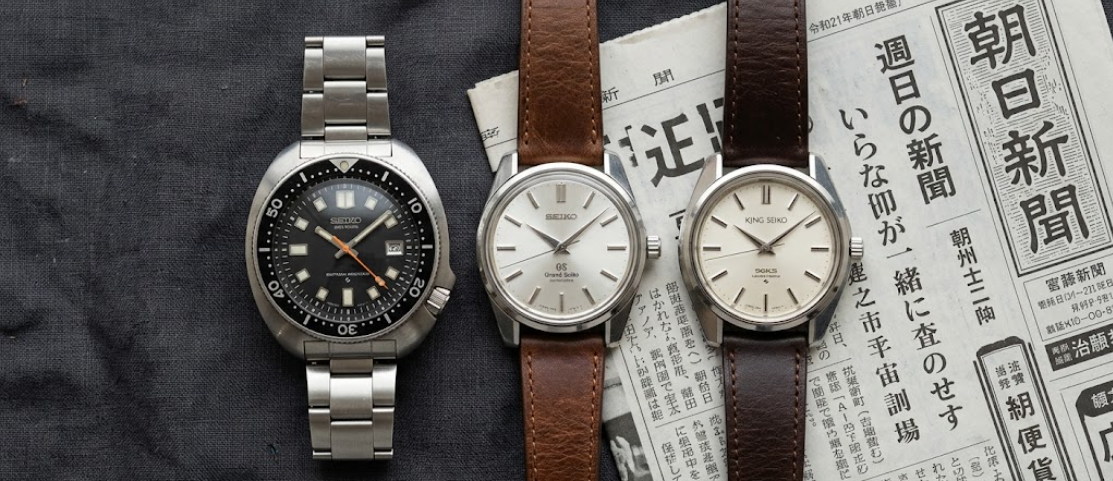
There is a moment every collector remembers — the first time they held a vintage Japanese watch and realized it was genuinely special. Not special in the way a press release tells you something is special. Actually special. The weight, the finish on the case, the texture of the dial. And then the price tag, which almost always makes you look twice, because it seems too low.
That is what draws most people into this corner of the hobby. And it is also what keeps them here.
This guide is for collectors who are just starting out or who are curious about Japanese vintage watches but have not yet bought one. There is a lot of noise in this space, and not all of it is helpful. What follows is a practical, honest overview — where Japanese watchmaking comes from, what to look for, where the pitfalls are, and how to actually get your hands on these watches.
A Brief History of Japanese Watchmaking
Japanese watchmaking has a longer, stranger history than most Western collectors realize.
In 1881, a 21-year-old entrepreneur named Kintaro Hattori opened a small shop in Ginza, Tokyo to sell and repair imported watches. In 1892, he established the Seikosha Factory, beginning the in-house production of clocks and, eventually, timepieces. The name "Seikosha" translates loosely as "House of Exquisite Workmanship," which tells you a great deal about the ambitions of the man behind it. In 1913, the factory produced Japan's first wristwatch: the Laurel.
Citizen was founded in 1918, Orient in 1950. By the 1960s, these three manufacturers had developed a clear competitive identity. Seiko was chasing precision — the Grand Seiko line launched in 1960 with the explicit ambition of rivalling Swiss luxury watchmaking. Citizen was pushing into new territory with chronographs and dive tools. Orient occupied a productive middle ground: technically accomplished, aesthetically interesting, and priced for working people.
The decade that matters most for collectors is the 1960s through the 1980s. Japan's vintage watches from this era are now among the most coveted pieces in the hobby, built on in-house manufacture movements, colorful and textured dials, and mechanical complications offered at prices that Swiss equivalents rarely matched.
And then came 1969. Seiko released the Astron — the world's first commercial quartz wristwatch — and changed the entire industry. The Quartz Crisis that followed nearly destroyed Swiss watchmaking. Japanese brands, which had helped trigger it, emerged from that era with their reputations intact and their manufacturing capabilities more advanced than ever.
The Big Three: What Each Brand Brings to the Table
Seiko
Seiko is where most collectors start, and for good reason. The brand's vintage catalogue spans iconic chronographs — the Pogue, Panda, Bullhead — alongside revered dive watches like the 6309 Turtle and the 6105, plus the horological precision of King Seiko and Grand Seiko.
The movement numbering system takes some getting used to, but it becomes second nature quickly. The first two digits of a Seiko reference number indicate the caliber; the third indicates case material. A 6105-8110, for instance, runs the caliber 6105, an early automatic movement with a diashock anti-shock system and a day-date complication, housed in a case designed specifically for professional diving use.
The Grand Seiko 62GS — reference 6245-9000 — is a particular highlight. The dial design, polishing, and chamfering work represent some of the finest output from any watchmaker of the era, anywhere. The Zaratsu polishing technique used on Grand Seiko cases, which produces flat, distortion-free mirror surfaces, remains one of the defining achievements of Japanese watchmaking craft.
Entry-level Seiko collecting is genuinely accessible. Clean examples of the Seiko 5 series — robust automatic movements, typically the 7S26 caliber — can be found for under $100. From there, the ceiling is as high as you want it to go.
Citizen
Citizen gets significantly less attention than Seiko in English-language collecting communities, which is honestly baffling. The brand produced exceptional chronographs in the late 1960s and through the 1970s. It was also a pioneer in titanium case construction and solar technology with the Eco-Drive system.
For vintage collectors, the Citizen Parawater series of the 1960s and the bullhead-style chronographs of the 1970s are particularly sought after. The Citizen Homer, a dress watch line with railway timing functionality, is another area worth exploring — well-documented in Japan, barely catalogued in the West.
The brand's movements are robust and well-engineered. Servicing costs are generally reasonable. The secondary market for Citizen is less inflated than Seiko, which means there are still genuine bargains to be found if you are willing to do the research.
Orient
Among the three major Japanese brands, Orient remains the most poorly documented in Western languages — which is part of its appeal. This is a brand where genuine discovery is still possible. Models surface at auction that have no established pricing history, no forum threads, nothing. You either know what you are looking at or you do not.
Vintage Orient collecting tends to attract a particular type of enthusiast: methodical, patient, genuinely interested in the history rather than the market. The catalogue spans elegant dress watches, unusual diver references, and multi-complication pieces from the 1960s and 1970s that would be far better known if the brand had operated out of Geneva instead of Tokyo.
Understanding JDM: Japan Domestic Market Watches
This is a concept that confuses new collectors more than it should.
While most watches from Seiko, Citizen, and Casio are sold worldwide, some models remain exclusive to the Japanese Domestic Market — a coordinated decision by the brand based on the watch's design, function, and expected regional performance.
Seiko's JDM releases are particularly renowned among collectors worldwide. Getting your hands on one can be a genuine challenge — and that difficulty is part of what makes them desirable.
A few things worth understanding about JDM watches:
Why does Japan get exclusive models? Several reasons, depending on the brand and era. Some models are designed with Japanese aesthetic sensibilities that brands believe won't translate to Western retail. Some reference Japanese cultural events or collaborations with domestic companies. Others are produced in such small quantities that international distribution makes no commercial sense. And in some cases, Japanese manufacturers simply produce a better-finished version of a watch for their home market, because Japanese consumers expect it.
JDM is not the same as "Made in Japan." While all JDM models are produced in Japan, not every "Made in Japan" marked watch is a JDM exclusive. The designation indicates that movement finishing and final assembly took place in Japan, though components may originate elsewhere.
Getting access. This is the practical challenge. If you are not physically in Japan or do not have a contact there, securing JDM models can be genuinely difficult — and navigating Japanese e-commerce platforms requires either language ability or considerable patience. Many collectors outside Japan struggle to access domestic listings and dealer networks. Services such as Nivern help bridge that gap by sourcing watches directly from Japanese marketplaces and trusted local dealers, handling authentication, and shipping internationally.
What Collectors Are Actually Buying (and Why)
The vintage Japanese watch market has matured considerably over the past decade. Prices on iconic Seiko references — the 6105, the Pogue chronograph, the 62GS Grand Seiko — have risen significantly as Western awareness has grown. But the market is still far from efficient. There are entire model lines that remain dramatically undervalued relative to their quality.
A few specific areas worth understanding:
King Seiko. Launched in 1961 as a rival to Grand Seiko within Seiko's own internal competition between its Daini Seikosha and Suwa Seikosha divisions, King Seiko watches represent some of the finest case finishing of the era. Reference numbers like the 4402-8000 and 5625-7110 are objects of genuine beauty. Prices have risen but remain reasonable relative to comparable Swiss pieces.
Seiko Brightz. The Brightz sub-collection is predominantly JDM-exclusive, which has made it highly sought after outside Japan. One standout is the SDGZ013, a 500-piece limited edition celebrating the 50th anniversary of Seiko's first chronograph movement. It is 41.9mm in titanium, powered by the 8R48 automatic chronograph caliber with hand-winding and hacking functionality.
Citizen vintage chronographs. Undervalued relative to their Seiko equivalents, technically accomplished, and still findable at reasonable prices. If you have patience and can read the market, this is a productive area to explore.
Orient automatics from the 1960s and 70s. The AAA, ChronoAce, and Swimmer references in particular. Many are unserviced examples that have been sitting in Japanese estate sales for decades. Condition varies enormously, but good examples exist.
The Most Common Mistakes Beginners Make
Buying dirty dials. Dial condition is everything in vintage Japanese watches. Unlike Swiss pieces where tropical dials can command premiums, a poorly aged Japanese dial is usually just a damaged dial. Moisture intrusion causes particular problems — look for spotting, lifting text, or uneven patina before buying.
Ignoring the crystal. Vintage Japanese watches typically used acrylic (hesalite) crystals. These can be polished and replaced relatively cheaply. But a cracked crystal that has been left in place — especially on a diver — is a warning sign for case interior issues. A replaced crystal on its own is not a problem; a replaced crystal that shows signs of water ingress is.
Over-paying for the wrong reference. Some Seiko references have been so thoroughly covered by YouTube and watch media that their prices no longer reflect their relative rarity or quality. Do your research before assuming that the most-discussed watch is the best value.
Skipping the service question. Vintage automatics need periodic servicing. An un-serviced movement running well is better than one that has been poorly serviced by an inexperienced technician. Always ask about service history, and budget for a service — typically $100 to $250 for most vintage Japanese automatics — when calculating the true cost of a watch.
Buying from unverified sources. There is a lot of counterfeit and frankenwatches in the vintage Japanese market. Reference dials get swapped onto wrong cases. Movements get replaced. Seiko's reference numbering system is actually quite useful here — the case back engravings should align with the movement inside — but you need to know what you are looking at, or buy from a dealer who does.
Where to Buy Vintage Japanese Watches
The options depend on your budget, risk tolerance, and how much time you want to invest.
Yahoo! Auctions Japan is the largest domestic source, with an enormous volume of material at prices that reflect the Japanese market rather than Western premiums. The challenge is language and logistics. You need a proxy buyer or forwarding service, and shipping costs add up.
Mercari Japan operates similarly — a domestic platform with high volume and variable quality. Condition descriptions are sometimes optimistic.
Western auction houses — including Chrono24, eBay, and the major watch-specific auction platforms — carry vintage Japanese pieces but at prices that reflect international demand. For well-known references, you will pay more here than you would in Japan.
Specialist dealers who source directly from Japan are worth finding. The advantage is authentication, condition grading, and the practical ability to ask questions before buying. Services like Nivern exist specifically to handle the sourcing, authentication, and shipping process for international collectors who want genuine Japanese market access without the logistical headache.
In person in Japan. The best option if you have the opportunity. Tokyo's flea markets — Oedo Antique Market, held twice monthly at Tokyo International Forum, is a good starting point — can turn up extraordinary pieces at prices that still, occasionally, feel like they belong to a different era.
Who Should Start Here?
Vintage Japanese watches suit collectors who value engineering over prestige, who find the scholarship as engaging as the objects themselves, and who want meaningful pieces at prices that do not require significant financial risk.
They are also ideal for collectors who are interested in wearing their watches rather than vaulting them. A well-serviced Seiko 6105 is a genuinely robust diving instrument. A King Seiko dress watch is something you can put on for a formal dinner without anxiety. These are objects made to be used.
What they are not ideal for: collectors who want clear, stable market values and easy liquidity. The vintage Japanese market is less efficient than the Swiss market, which cuts both ways. The bargains are real; so is the uncertainty.
Conclusion
The appeal of vintage Japanese watches is not complicated. These are technically accomplished, beautifully made objects from an era of serious manufacturing ambition, available at prices that still seem improbable given their quality. The market is maturing, but it has not yet fully caught up with what these watches actually are.
Start with something you genuinely want to wear. Learn the reference numbering. Find a community — the forums and Discord servers for Seiko and vintage Japanese collecting are generally welcoming and knowledgeable. And if you find yourself drawn to the JDM side of the market, be prepared to invest time in sourcing, or to find trusted partners who have already done that work.
This is a corner of the hobby where the research is part of the pleasure. The watches reward attention.
FAQ
What are vintage Japanese watches? Vintage Japanese watches are mechanical and quartz timepieces produced by Japanese manufacturers — primarily Seiko, Citizen, and Orient — from roughly the 1950s through the 1980s. They are valued for their in-house movements, distinctive design aesthetics, and robust build quality relative to their price in the secondary market.
What does JDM mean in watches? JDM stands for Japanese Domestic Market. It refers to watch models that are produced exclusively for sale within Japan. These are often better-specified or more distinctively designed than international equivalents, and they command interest from collectors worldwide precisely because they are difficult to obtain outside Japan.
Are vintage Japanese watches worth buying? Yes, for most collectors. They offer genuine mechanical quality, interesting history, and — relative to comparable Swiss pieces — significant value. The caveat is condition: a well-preserved example is worth considerably more than a damaged one, and inspection before purchase matters.
How do I authenticate a vintage Seiko? Seiko's reference numbering system is your primary tool. The number engraved on the case back (e.g., 6105-8110) should match the movement inside. Cross-reference this against established databases, such as The Seiko Guy (theseikoguy.com), and look for dial printing consistency, correct hands for the reference, and signed crowns. When in doubt, buy from a dealer with a reputation for authentication.
Where can I buy vintage Japanese watches outside Japan? Chrono24, eBay, and specialist vintage dealers are the most accessible options. For direct-from-Japan sourcing, you can use proxy buying services for platforms like Yahoo! Auctions Japan and Mercari Japan, or work with sourcing specialists such as Nivern, which handles authentication and international shipping for collectors who want genuine access to the domestic Japanese market.
What is the best vintage Japanese watch for beginners? A Seiko 5 series automatic is the standard recommendation, and it remains sound. It is inexpensive, uses a reliable and well-documented movement (typically the 7S26 or 6309 caliber), and will teach you a great deal about what to look for in vintage Japanese watches generally. From there, the Seiko Presage, King Seiko, and Citizen vintage divers are natural next steps depending on your interests.
Sources & References
- Seiko Museum Ginza — Company History: museum.seiko.co.jp
- Seiko Watch Corporation — Our Heritage: seikowatches.com
- Fratello Watches — "Collector's Week 2.0: Collecting Vintage Japanese Watches: A Never-Ending Journey" (September 2022): fratellowatches.com
- Fratello Watches — "Finding the Best Seiko Japan Domestic Market (JDM) Watches" (October 2021): fratellowatches.com
- Teddy Baldassarre — "The Best JDM Seiko Watches and Their Modern Alternatives" (February 2026): teddybaldassarre.com
- Chrono24 Magazine — "Hidden Treasures: Exploring the Finest Seiko JDM Watches" (October 2023): chrono24.com
- Everest Bands — "JDM Watches: Everything You Need to Know" (July 2023): everestbands.com
- The Seiko Guy — Vintage Grand Seiko Reference Database: theseikoguy.com
- Atelier Victor — Vintage Japanese Watches: ateliervictor.co
- Revolution Watch — "Seiko's 100th Anniversary" (July 2024): revolutionwatch.com