Best Vintage Seiko Watches Under $500
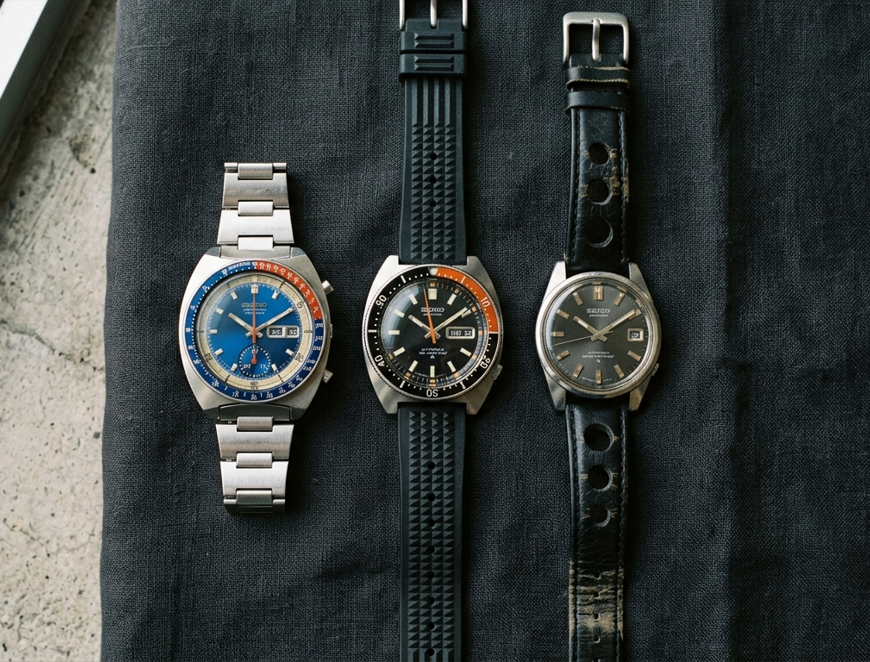
There's a particular category of watch collecting that doesn't get enough proper attention: vintage Seiko at the sub-$500 level. Not because the watches are unremarkable — several of them represent genuine horological firsts — but because the category is large, the reference numbers are confusing to newcomers, and a lot of the coverage online is either too surface-level or aimed at completists who already know everything.
What exists in the vintage Seiko market under $500 is genuinely remarkable. You can buy the world's first automatic chronograph, a hi-beat dress watch that ran alongside early Grand Seiko, and a 1960s sport diver that looks better in hand than most modern pieces costing four times as much. The challenge isn't finding good watches; it's knowing which ones to look for.
This is a guide to the specific references worth knowing, with the historical context and buying considerations that actually matter.
Why Vintage Seiko Remains the Collector's Benchmark for Value
Seiko's history as a manufacture is substantial in the literal sense: the company has produced its own movements, cases, dials, crystals, and straps in-house to a degree that Swiss brands rarely match. The Suwa and Daini factories, which operated as competing divisions within Seiko throughout much of the 1960s and 70s, produced movements at a level of technical ambition that the brand's entry-level positioning in Western markets consistently obscured.
The result is that vintage Seiko watches — particularly those produced in Japan for the domestic market before the quartz crisis reshaped the industry in the late 1970s — carry genuine horological credentials that have only recently begun to be priced accordingly. The window for acquiring significant references at accessible prices is narrowing, but it has not closed.
The Watches
Seiko 6139 Speedtimer (1969–1977)
The Reference
The 6139 is the best argument for vintage Seiko collecting that exists, and the argument works at multiple price levels. The caliber 6139 was Seiko's entry into the automatic chronograph race that defined 1969 — the same year Zenith released the El Primero and the Heuer/Breitling/Hamilton-Buren consortium released the Calibre 11. Seiko launched the 6139 in the spring of 1969, and the movement's technical specification still impresses: a column-wheel vertical clutch chronograph, automatic winding via Seiko's proprietary "magic lever" system, 21 jewels, a 30-minute chronograph counter at 6 o'clock, and date and day complications — all in a self-winding movement at a time when competitors were building chronographs around simpler cam-and-lever constructions.
The specific variant that cemented the 6139's place in collecting history is the ref. 6139-6005, known as the "Pogue." Colonel William Pogue, a NASA astronaut assigned to the Skylab 4 mission in 1973, wore a 6139 — specifically, a yellow-dialled example he had used throughout training — aboard the mission, making it the first automatic chronograph worn in space. Pogue had purchased the watch at an air base kiosk for $71. The Omega Speedmaster was the standard-issue NASA watch; Pogue simply trusted the Seiko he knew.
The story was largely unknown until photographs of Pogue wearing the watch in the Skylab module surfaced on collecting forums around 2006. Prices for 6139s moved sharply afterward.
Specifications
- Reference numbers: 6139-6000, 6139-6002, 6139-6005, 6139-6010, 6139-8020 (among others)
- Movement: Caliber 6139, 21 jewels, automatic, column-wheel vertical clutch chronograph, 21,600 vph
- Case size: 41mm diameter, approximately 14mm thick
- Production years: 1969–approximately 1977
- Lug width: 18mm
Collector Appeal and Market
The 6139 comes in a range of dial variants — yellow, blue, silver, orange — with different reference numbers. The yellow-dialled "Pogue" references (6139-6002 and 6139-6005) command premiums. A clean example of a Pogue in solid condition will exceed $500 today and has been doing so for several years. The blue-dialled 6139-6000 and the silver-dialled variants remain accessible at the $300–$500 level in good condition, though as interest in the 6139 has grown more broadly, even non-Pogue examples have been climbing.
The 6139-8020, a variant with a black dial and external tachymeter bezel, is often more accessible than the colourful references and is equally interesting as a representative of Seiko's automatic chronograph engineering.
Condition matters particularly with the 6139 because the chronograph pushers are integral to the case and prone to damage, and the inner rotating bezels on early references can be tricky to find replacements for. Buying a well-serviced example, or budgeting for service, is the correct approach.
Seiko Lord Marvel 5740-8000 (1967–late 1970s)
The Reference
The Lord Marvel sits in a curious position in Seiko's hierarchy. It was never Grand Seiko — that designation carried its own testing standards and presentation — but for the 5740-8000, Seiko made a technical decision that reflects well on where the brand placed the Lord Marvel in its own estimation: they put their first 36,000 bph movement in it.
In 1967, Seiko launched the caliber 5740C, a 23-jewel manual-wind movement beating at 36,000 vibrations per hour. This was the first Japanese watch movement to achieve a true hi-beat rate and the second in the world after Girard-Perregaux's Gyromatic caliber from 1966. Rather than debut this movement in the Grand Seiko line, Seiko put it in the Lord Marvel 5740-8000 — treating the Lord Marvel as the technology testbed for a movement that would later inform the hi-beat Grand Seiko calibers that collectors now pay considerably more to own.
The watch itself is a 37mm manual-wind dress watch, understated almost to a fault. A round stainless steel case, applied indices, a linen or sunburst dial depending on variant, and a case finishing that reflected the care Seiko's Suwa division put into its upper-tier domestic production. The caseback on many examples carries the "Seahorse" medallion, a recurring Seiko emblem on quality domestic pieces of this era.
Specifications
- Reference numbers: 5740-8000, 5740-8010, 5740-8020 (among others)
- Movement: Caliber 5740C, 23 jewels, manual wind, 36,000 bph, approximately 40-hour power reserve
- Case size: 37mm diameter, approximately 12mm thick
- Production years: 1967–late 1970s
- Lug width: 18mm
Collector Appeal and Market
The Lord Marvel 5740-8000 is properly undervalued and has been for some time. On Yahoo Auctions Japan and through specialist secondhand dealers, examples in honest worn condition can be found for $150–$300; cleaner, unpolished examples with original bracelets approach $400–$500. The Worn & Wound piece on the LM5740 from 2016 brought it to wider attention, but it has not yet experienced the price escalation that the 6139 has.
The practical consideration is movement service. The 5740C runs at 36,000 bph, which means the movement wears faster between services than a standard 18,000 or 21,600 bph caliber. Finding a watchmaker experienced with high-beat vintage Seiko movements matters. The movement is not fragile, but it rewards proper maintenance.
For dress watch collectors who want genuine horological provenance at a price point that makes daily wearing sensible, the Lord Marvel is one of the most compelling arguments in vintage collecting at this level.
Seiko 6106 Sport Diver (1967–early 1970s)
The Reference
Seiko introduced the 6106 Sport Diver line in 1967 as its first water-resistant sport watch, positioning it for the emerging market of casual water sports and surf culture that was gaining traction globally in the late 1960s. The 6106 was rated to 70 metres — marketed in period advertising as "proof" diving — and came without a traditional diving bezel, placing it in the light sport diver category rather than as a professional instrument.
What the 6106 offers that has kept it relevant to collectors is, primarily, the dial. The dials across the 6106 range — grey, silver-white, cobalt blue, dark green — are finished to a standard that was exceptional for accessible sports watches at the time. Sunburst finishes, applied luminous indices, and minimal text created dials that genuinely sparkle in natural light. The case shape, a contoured tonneau with sharp case lines and a recessed crown, holds up well against the design language of the period.
The 6106 caliber itself is a 17-jewel automatic with day/date display. It is a workmanlike movement — not technically ambitious in the way the 6139 or 5740C are — but reliable and well-supported by the vintage service community.
Specifications
- Reference numbers: 6106-8100, 6106-8237 (cobalt blue dial), 6106-6439, 6106-7117 ("Rally" bezel variant), among many others
- Movement: Caliber 6106, 17 jewels, automatic, day/date, 21,600 vph
- Case size: Approximately 38–43mm depending on variant (tonneau case shape measures differently across axes)
- Production years: 1967–approximately 1972
- Lug width: 19mm
Collector Appeal and Market
The 6106 is arguably the best entry point to vintage Seiko collecting that currently exists under $500. The range of dial variants creates genuine collecting depth — the cobalt blue 6106-8237 is the most sought-after and commands the highest prices, while the grey-dialled 6106-8100 is more accessible and, in honest condition, equally compelling. Budget $150–$350 for a good example across most variants; the blue dial will push toward the top of that range or slightly above for clean pieces.
The watch wears larger than its nominal dimensions suggest due to the tonneau case shape and prominent lugs, which suits modern wrist preferences reasonably well despite being 50-plus years old.
One practical point: the original Seiko bracelets for these watches are frequently found stretched beyond comfortable wear after decades of use. The watches look excellent on nylon or leather straps, and a worn bracelet should not deter a purchase, but factor in the cost of an appropriate strap.
Seiko Bell-Matic 4006 (1967–1978)
The Reference
The Bell-Matic is the category of vintage Seiko that tends to surprise people who encounter one for the first time. The caliber 4006 — or the rarer 4005, which displays date only — is a self-winding mechanical alarm movement: the hammer strikes a coiled spring coaxially mounted in the movement, producing a distinct, metallic chime at the set time. It is not a loud alarm. It is a precise, quietly mechanical one, and hearing it go off on the wrist is one of those small experiences that reminds you what mechanical watchmaking at its best can do.
The Bell-Matic was produced in a broad range of case designs across its decade-plus production run. The standard 4006-7000 references are the most common: cushion-shaped cases in stainless steel, available in dial colours including white, black, blue, and gold sunburst variants, with the "Dolphin" caseback — a decorative element that has become one of the most recognisable details among Bell-Matic collectors — featured on early production pieces. The so-called "UFO" variants (references 4006-6001 and 4006-6002) take the design further, with dramatically wide, saucer-shaped cases that sit firmly in late-1960s Japanese design sensibility and have aged into genuine character pieces.
Specifications
- Reference numbers: 4006-7000, 4006-6001, 4006-6002 ("UFO"), 4006-6050 (among many others)
- Movement: Caliber 4006, 17 jewels, automatic, mechanical alarm, day/date
- Case size: Varies by reference; standard variants approximately 38–40mm, UFO variants wider
- Production years: 1967–1978
- Lug width: 18mm (standard); varies on UFO case
Collector Appeal and Market
The Bell-Matic rewards patience in sourcing. Standard 4006-7000 references in honest condition are available in the $150–$350 range; condition and dial colour affect price significantly, with the "Dolphin" caseback references and pristine sunburst dials at the top. The UFO variants have appreciated faster and now regularly exceed $400 for good examples, with particularly clean pieces from Japan pushing toward and occasionally above $500.
What to look for: alarm function working correctly (test this specifically), crown functions smooth through all positions, and dial condition unmarked by moisture. The mechanical alarm complication adds service complexity; finding a watchmaker familiar with the caliber 4006 before purchasing is sensible.
The Bell-Matic is not the watch for a collector focused purely on investment; it is the watch for a collector who wants something genuinely different in their rotation, with a complication that modern watchmaking has largely abandoned at this price point.
Common Mistakes Collectors Make with Vintage Seiko
Buying on dial appeal without checking movement condition. Vintage Seiko dials frequently look better than the movements inside them, because dials preserve well under glass and movements do not service themselves. A watch with a beautiful dial that hasn't been serviced in 20 years is a restoration project, not a finished purchase.
Ignoring the caseback. The caseback of a vintage Seiko tells you several things at once: whether it's the correct caseback for the reference, whether the movement has been accessed by someone who knew what they were doing (tool marks vs. pristine), and in some cases — like the Bell-Matic "Dolphin" — whether a collectible variant detail is present. Always request caseback photographs.
Treating all references within a model line as equivalent. Within the 6139, 6106, and Bell-Matic lines, reference numbers matter considerably. The same model designation can encompass common variants worth $200 and sought-after variants worth twice that. Research the specific reference number before purchasing.
Over-prioritising original bracelets at the expense of movement condition. An original bracelet adds value, but not if the movement needs a full service. Prioritise movement and dial, and treat the bracelet as a bonus.
Purchasing from sellers who cannot confirm running condition. "Sold as-is" on a vintage mechanical watch means something specific. Factor service costs into any purchase where function is unconfirmed.
Sourcing Vintage Seiko Under $500: Where to Look
The domestic Japanese secondhand market remains the deepest source for vintage Seiko in good condition. Yahoo Auctions Japan and Mercari Japan surface examples regularly, often in better condition than equivalent pieces sold through Western channels, because many of these watches spent their working lives in Japan and were cared for accordingly.
The practical challenge for international buyers is platform access, language barriers, and authentication without being able to examine the piece in person. Services like Nivern, which source watches directly from Japanese markets and trusted local dealers, handle these practical hurdles while applying condition and authenticity checks before the watch ships internationally — which matters particularly for vintage pieces where condition details that affect value don't always read clearly in auction photographs.
For buyers comfortable navigating the platforms independently, Chrono24 and eBay have consistent vintage Seiko inventory at this price level, though condition standards vary more widely than in the domestic Japanese market and pricing for popular references like the 6139 often reflects international collector demand.
Conclusion
The vintage Seiko market under $500 is not a consolation prize for collectors who can't afford more. It is, for the specific references discussed here, a legitimately compelling category that offers horological history — the first automatic chronograph in space, the second hi-beat movement in the world, watches designed with a level of dial and case care that contemporary mass production rarely achieves — at prices that still make daily wearing a rational decision.
The 6139, the Lord Marvel 5740-8000, the 6106 Sport Diver, and the Bell-Matic are four distinct collecting propositions within a single brand's history. Each rewards the effort of learning it properly. None of them will stay this accessible indefinitely.
FAQ
What is the most collectible vintage Seiko watch under $500? The 6139 Speedtimer chronograph is the most historically significant, being the world's first automatic chronograph movement and later the first automatic chronograph in space (worn by Colonel William Pogue on Skylab 4 in 1973). Non-Pogue 6139 variants remain findable under $500 in good condition, though the market is tightening.
Are vintage Seiko watches reliable for daily wear? Yes, provided the movement has been serviced within the last three to five years. Vintage automatic movements in known running condition are generally robust for daily wear; the key variables are service history and crystal condition. The 6106 caliber in particular has a reputation for durability.
What should I check before buying a vintage Seiko? Confirm the movement is running (not just ticking — confirm seconds hand is sweeping), check dial condition for moisture damage or restoration, request caseback photographs to assess service history and originality, and verify the reference number matches the described watch. For chronographs, test the pushers.
How do I service a vintage Seiko movement? Most independent watchmakers experienced with vintage Japanese movements can service 6106, 6139, 4006, and 5740 calibers. Seiko's own service centres will also service vintage calibers, though parts availability varies. Budget approximately $150–$250 for a full service from a competent independent watchmaker.
Is the Seiko Lord Marvel 5740 a JDM watch? The Lord Marvel was produced primarily for the Japanese domestic market, though it had some international distribution in its early years. Later production of the 5740-8000 was sold only in Japan even after it was discontinued internationally, making surviving examples predominantly Japan-sourced. This is part of why the best examples are still found in the Japanese secondhand market.
What does the reference number tell me on a vintage Seiko? The first four digits identify the caliber family (6139 = the 6139 chronograph movement; 6106 = the 6106 automatic, etc.). The four digits after the hyphen identify the specific case and dial configuration. Both parts of the reference number matter for identifying exactly which variant you're looking at.
Are there fakes of popular vintage Seiko references? For 6139 Speedtimers, particularly Pogue variants, aftermarket and counterfeit dials exist. The movement should be examined — a genuine 6139 caliber is identifiable to an experienced eye. For models like the 6106 and Bell-Matic, outright fakes are less common, but re-dialling (replacing a damaged dial with an incorrect one) does occur. Buying from reputable sources or having a watch authenticated reduces this risk.
Sources & References
- The Seiko Museum Ginza — "5 SPORTS Speed-Timer 6139: A Wristwatch that Experienced Space Travel, the First Automatic Chronograph": https://museum.seiko.co.jp/en/knowledge/trivia10/
- Plus9Time — "50th Anniversary of the First Automatic Chronograph – Seiko's 6139" (detailed production dating and early reference documentation): https://www.plus9time.com/blog/2019/3/14/50th-anniversary-first-auto-chronograph
- Chrono24 Magazine — "The Legend of the Seiko 6139" (Pogue story, historical context): https://www.chrono24.com/magazine/the-legend-of-the-seiko-6139-p_80595/
- Worn & Wound — "Affordable Vintage: Seiko Lord Marvel 5740-8000 (LM5740) Hi-Beat" (movement history, production years, specifications): https://wornandwound.com/affordable-vintage-seiko-lord-marvel-5740-8000-lm5740-hi-beat/
- Zeit Vintage Watch — "The Seiko Lord Marvel: A Marvel in Horology" (caliber 5740C history, case specifications): https://www.zeitvintagewatch.com/blogs/blogs/the-seiko-lord-marvel-a-marvel-in-horology-vintage-seiko-watches
- Coronet Magazine — "Lord Marvel and King Seiko History" (production timeline, factory context): https://www.coronet.org/1minute-reads/lord-marvel-and-king-seiko-history
- Fab Collectibles — "Seiko 6106-8100 Sport Diver" (case and dial specifications, marketing history): https://www.fabcollectibles.com/lifestyle/vintage-watches/seiko-6106-8100.html
- DC Vintage Watches — 1970 Seiko 6106-7117 "Rally" Sport Diver (production details, dial information): https://www.dcvintagewatches.com/product-page/1970-seiko-6106-7117-rally-sport-dive-watch
- Japanese Microbrands — "Seiko Bell-Matic: A Masterpiece of Japanese Engineering" (Bell-Matic history, variants, Dolphin caseback details): https://japanese-microbrands.com/en/blogs/japan-vintage-journal/seiko-bell-matic-ein-meisterstuck-japanischer-ingenieurskunst
- I Know Watches — "The Seiko Bell Matic (4005, 4006) — A Detailed Guide" (reference variants, UFO case information): https://iknowwatches.com/seiko-bell-matic-4005-4006-guide/
- Vintage Watch Inc — "Seiko 6139 Chronographs Full List" (reference breakdown, Pogue variant details): https://vintagewatchinc.com/seiko/6139-chronograph/
- WatchUSeek Forums — "Best Vintage Watches Under $500" (collector discussion, 6139 context): https://www.watchuseek.com/threads/best-vintage-watches-under-500.2665818/
- Analog:Shift — Seiko 6139 "Pogue" Chronograph Blue (pricing history, post-2006 market context): https://www.analogshift.com/products/seiko-6139-pogue-chronograph-blue